A new research project aims to learn from communities about care during war
June, 2026- Millions of Ukrainians with disabilities are living through the war with far too little attention from researchers and policymakers. A new collaborative project, Caring to Survive, sets out to change that by documenting the everyday experiences of persons with disabilities and using its findings to reshape how the world responds to disability in conflict zones.
The 30-month UKRI-funded project is led by Edinburgh Napier University in partnership with People’s Palace Projects (PPP) at Queen Mary University of London, the National Assembly of People with Disabilities of Ukraine (NAPDU), and the Institute of Sociology, National Academy of Sciences of Ukraine.
PPP leads the project’s arts-based research methodology with Clod Ensemble and Graeae Theatre Company. The approach, at the centre of the Caring to Survive project, reaches experiences that conventional research misses.
“This research will take place in the heart of a war zone, focusing on those who are most forgotten in the chaos of conflict,” said Professor Paul Heritage, Founder and Director of People’s Palace Projects. “Our arts-driven approach isn’t just about creativity or academic study: it’s a lifeline, connecting community networks forged in adversity.”
Working directly with communities across five Ukrainian cities, Kyiv, Odesa, Dnipro, Vinnytsia and Cherkasy, PPP will train ten Ukrainian artists, two from each city, in arts-based research methods. Those artists will then lead creative workshops and one-to-one sessions with persons with disabilities in their homes, producing audio and video testimonies, commissioned artworks, scholarly publications, and policy briefings, all designed to inform humanitarian responses in Ukraine and beyond.
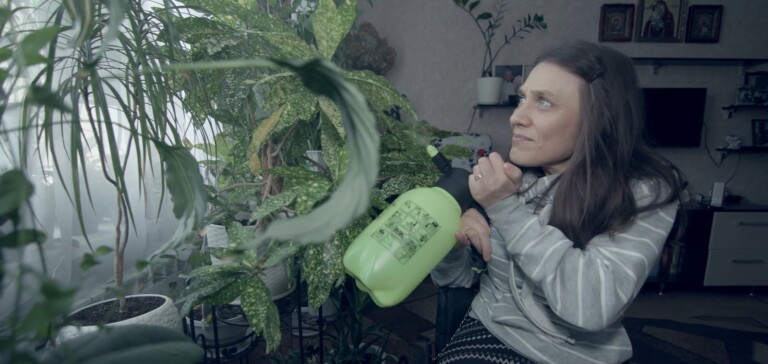
Using arts-based and social science methodologies, the project will document the informal care networks that persons with disabilities have built for themselves during the war: everyday practices such as cooking, gardening, singing and storytelling, what the research team calls the “aesthetics of care.”
Before the invasion, Ukraine had approximately 2.7 million people registered as living with a disability. That figure has risen sharply: according to the European Disability Forum, citing Ukraine’s Ministry of Social Policy, approximately 3.4 million people in Ukraine now live with disabilities, with estimates indicating this could reach five million due to the war’s ongoing impact. In 2023 alone, the Medical and Social Expert Commission issued 145,000 new disability certifications, primarily for war-related injuries, and the Ministry of Health estimates that by mid-2024, 100,000 amputations had been performed as a direct result of the war in a country now classified as the most heavily mined on the planet.
“The war in Ukraine has radically changed the lives of millions and significantly increased the number of people with disabilities,” said Viktoriia Nazarenko, Secretary General of the NAPDU. “Yet, at the same time, it has revealed the incredible strength of mutual support within communities. Persons with disabilities, their families, and civil society organisations are uniting to help one another, find solutions, and build care networks even under the most difficult conditions. It is this experience of solidarity and resilience that is vital to research and making visible.”
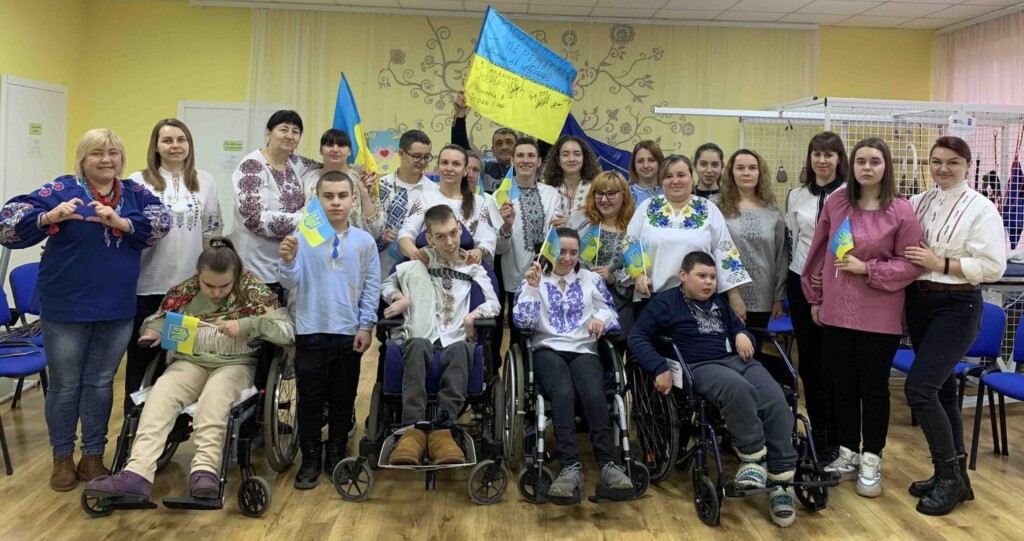
Five artworks will be commissioned from local artists based on the research data, and the project will culminate in a Festival of Care showcasing creative and documentary work developed with participants across Ukraine.
Professor Kiril Sharapov, Principal Investigator and Professor in Forced Migration at Edinburgh Napier University, said the project’s premise is that persons with disabilities in Ukraine have not been passive victims. In the absence of adequate state support, evacuation corridors that failed wheelchair users, shelters without adaptations, social services overwhelmed by displacement, communities have improvised.
“The war in Ukraine has exposed just how quickly care systems can collapse, and how resourcefully communities of persons with disabilities respond when they do,” he said. “At a time when disability is too often reduced to vulnerability in humanitarian responses, this research centres persons with disabilities as creative agents of change.”
The project’s legacy will extend beyond Ukraine. With conflicts intensifying globally, the team intends the frameworks it develops for supporting persons with disabilities in war zones and rebuilding inclusive care infrastructure in post-conflict settings to be applicable wherever communities are forced to survive without functioning state support.
“With the war in Ukraine now in its fifth year,” said Professor Sharapov, “the insights we generate will shape how care is understood and delivered not only in Ukraine, but in conflict-affected communities globally.”
Care to Survive runs for 30 months from June 2026. Creative partners include Clod Ensemble, whose Circle of Care methodology will be used to train Ukrainian artists, and Graeae Theatre. Advisory input comes from Jenny Sealey (Artistic Director, Graeae) and Claire Cunningham. Research Consultant: Professor James Thompson, University of Manchester.
Read the announcement at Nappier Website
About the Partners
Edinburgh Napier University is a leading professional university based in Edinburgh with a strong track record in applied research addressing real-world social challenges, including forced migration, public health, and social justice. www.napier.ac.uk
People’s Palace Projects (PPP) is an arts and research organisation at Queen Mary University of London with over 30 years of experience co-creating research with marginalised communities across Brazil, India, and conflict-affected settings, including the favelas of Rio de Janeiro and Indigenous territories. www.peoplespalaceprojects.org.uk
The National Assembly of People with Disabilities of Ukraine (NAPD) is the country’s leading disability rights body, representing 120 national and regional organisations. A member of the European Disability Forum, it has been a central actor in Ukraine’s humanitarian response since February 2022. www.naiu.org.ua/en
The Institute of Sociology, National Academy of Sciences of Ukraine is one of Ukraine’s leading social science research institutions, conducting academic research across a broad range of social, cultural, and humanitarian issues. www.isnasu.org.ua/en
Clod Ensemble is a London-based performance company whose Circle of Care methodology is used internationally to develop compassionate care practices through creative training. www.clodensemble.com
Graeae Theatre Company is the UK’s leading Deaf and disabled-led theatre company, pioneering inclusive practice in the arts since 1980. www.graeae.org
UK Research and Innovation (UKRI) is the UK’s largest public funder of research and innovation, supporting internationally collaborative research that addresses pressing humanitarian, social, and scientific challenges. www.ukri.org