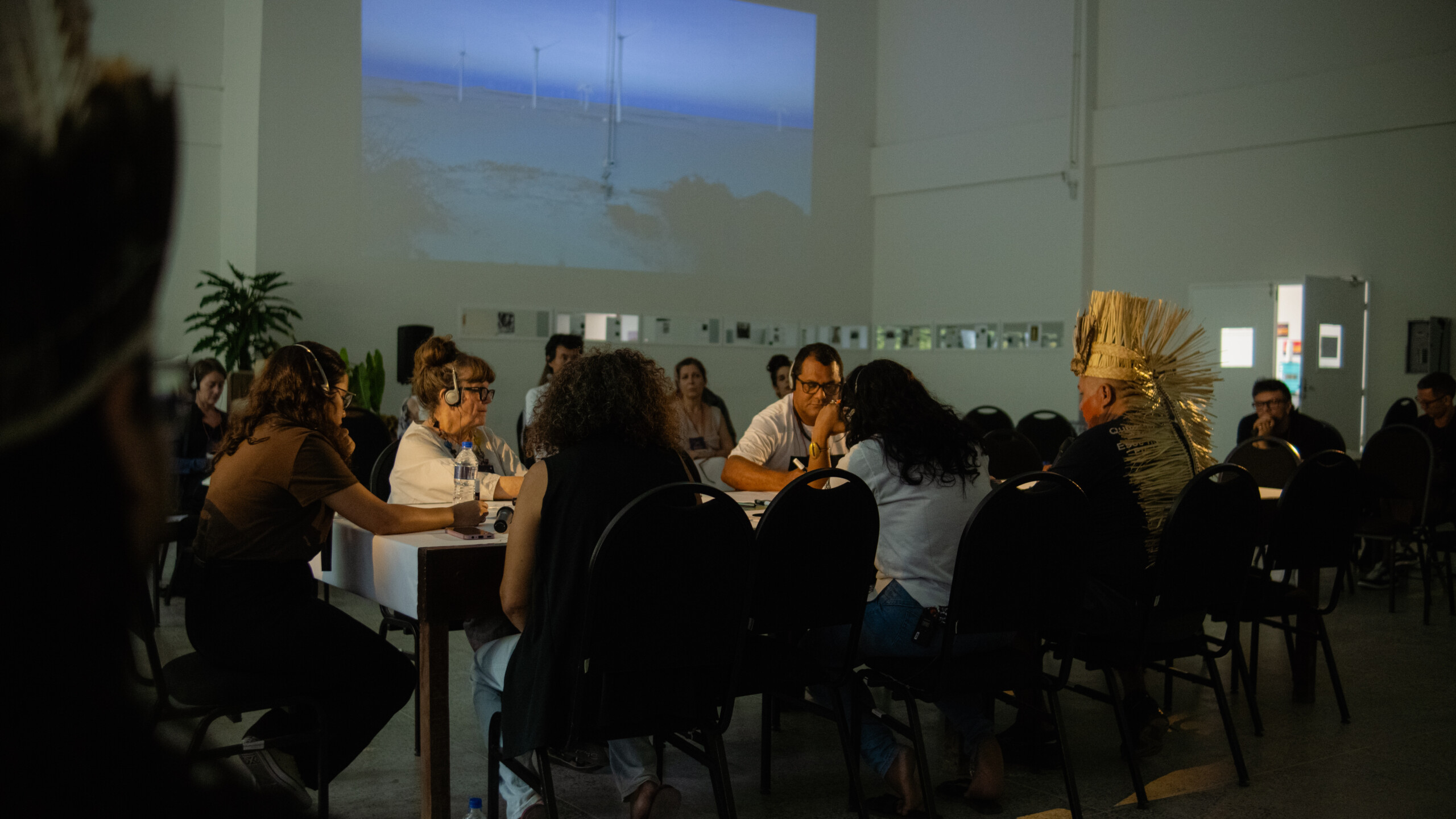
Fortaleza, Brazil – In December 2025, PPP brought the Long Table methodology to the Federal University of Ceará (UFC), transforming a long table into a space for listening, sharing, and collective reflection. The activity was carried out in partnership with Instituto Terramar and LaboCart/UFC as part of the international conference PSi #30 – CRUZO, CRUISING, ENCRUZILHADAS. Rapper and poet Thiago SKP, from Minas Gerais, also took part in the conference at PPP’s invitation.
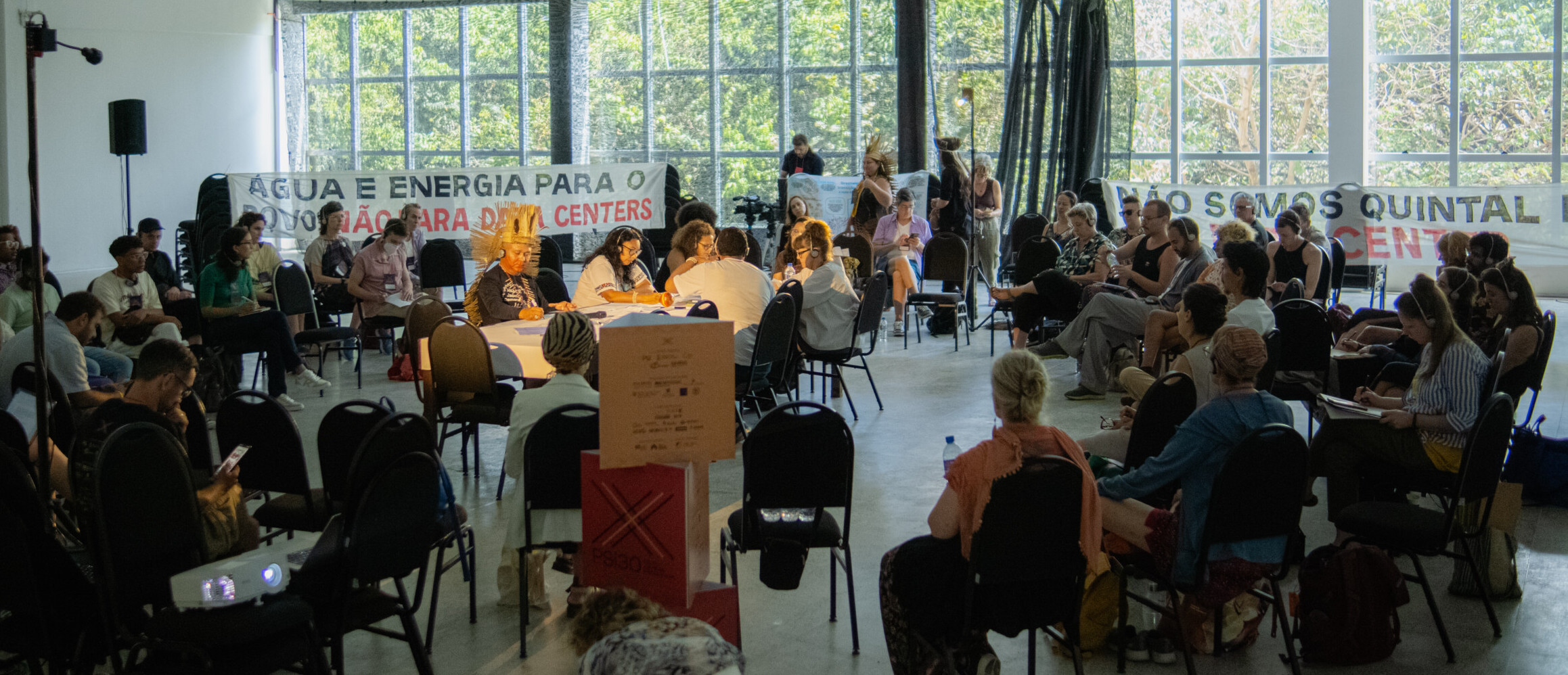
Created by PPP associate artist and former Queen Mary University of London Drama lecturer Lois Weaver, the Long Table breaks with traditional hierarchies and invites active participation. In Fortaleza, The Long Table – at the crossroads of the transition to green energy, focused on a Just Transition to Green Energy, addressing the historical consequences of resource exploitation and the impacts of the Green Hydrogen (H2) hub. The format gained strength by rooting itself in the territories, knowledge systems, and lived experiences of those directly affected by the energy transition.
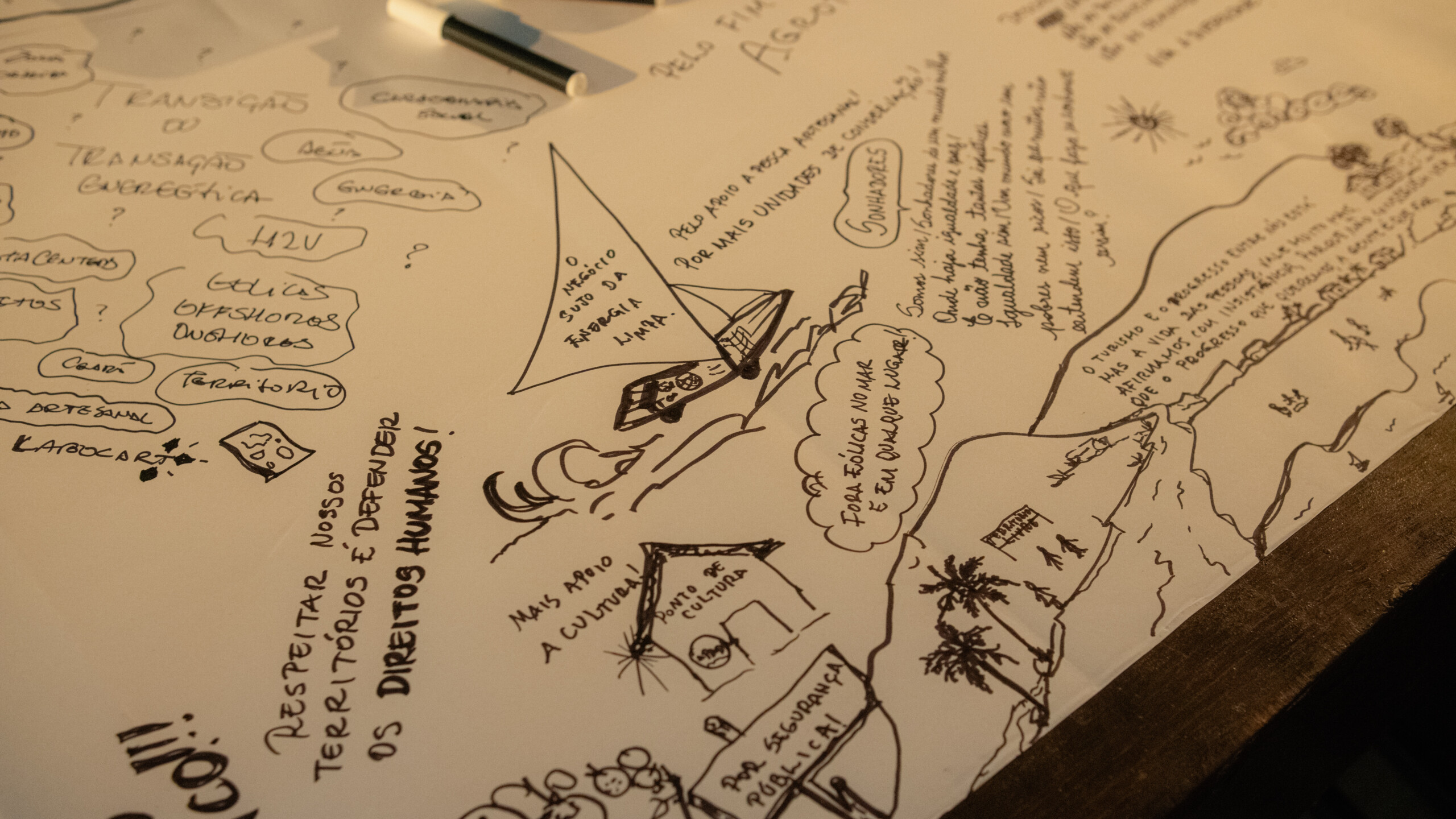
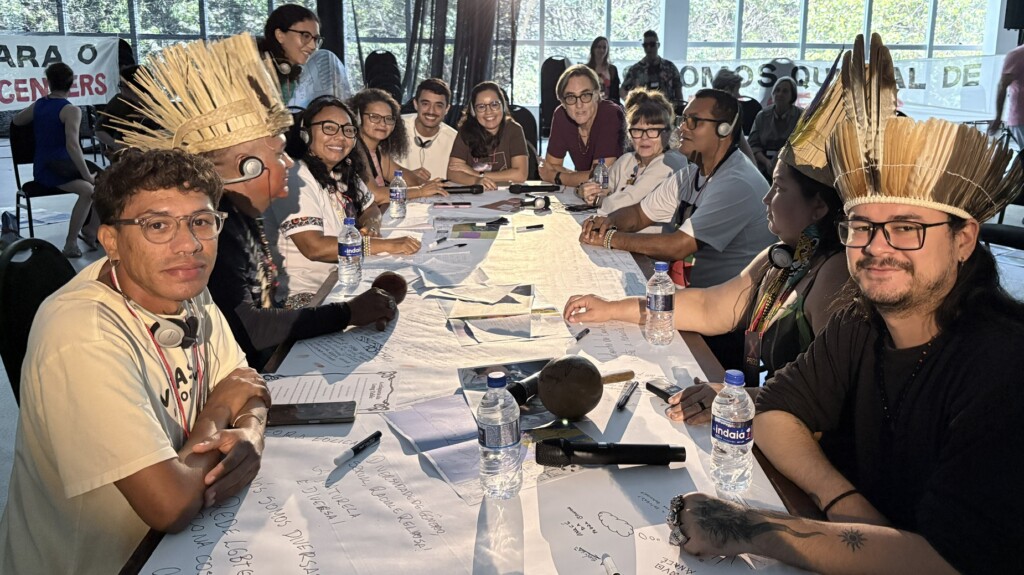
Around the table, around 50 people took part in an open conversation accompanied by gestures, drawings, maps, memories, and expressions recorded on paper, which itself became a shared territory of collective expression.
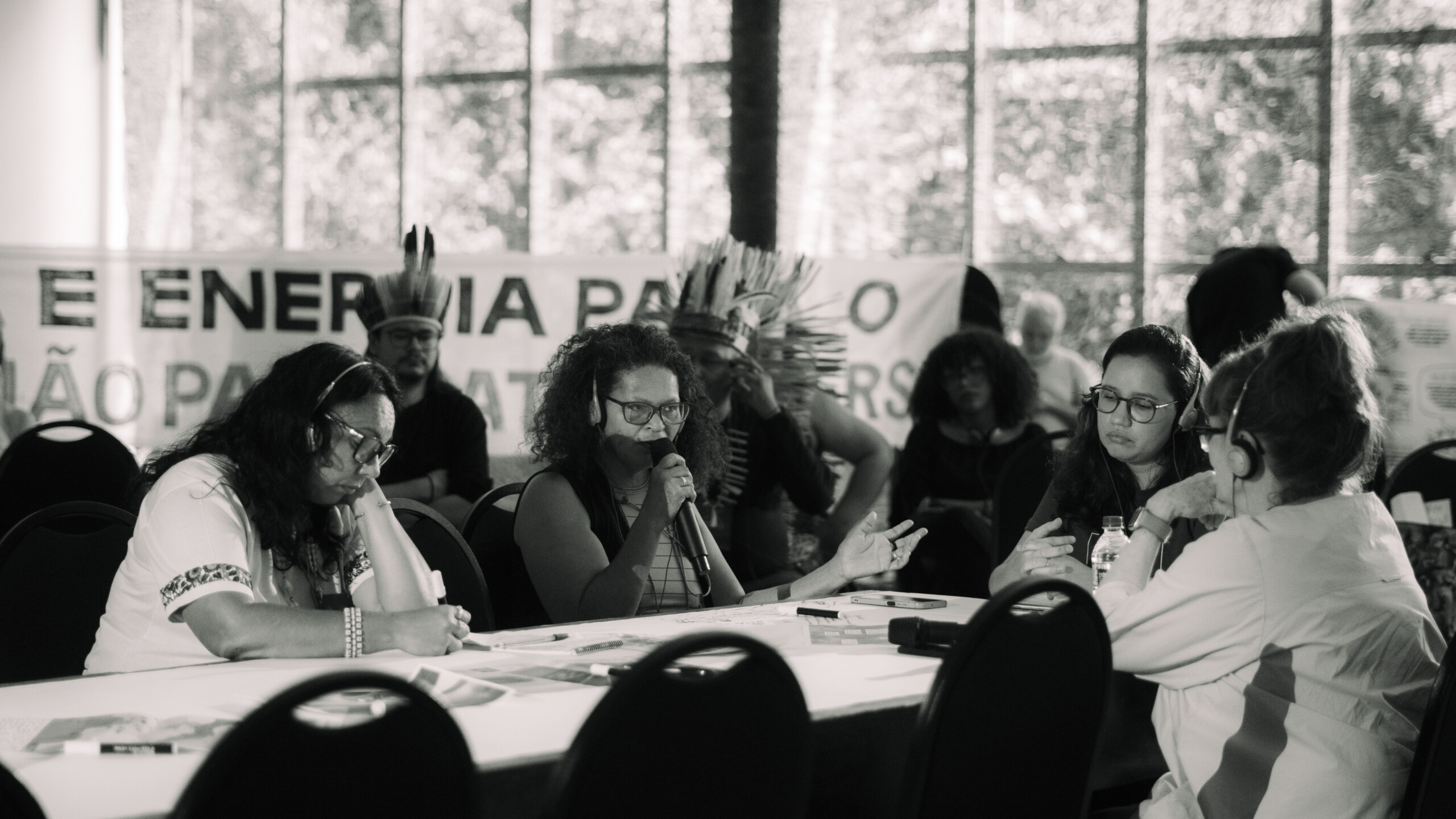
Community leaders, Indigenous and quilombola representatives, artists and activists accepted the invitation and brought to the debate their experiences, struggles and critical perspectives on the historical impacts of natural resource exploitation and green energy projects in the state.
Lois opened the table to Valneide Sousa, a leader from the Sabiaguaba Settlement engaged in the struggle for land rights, and Ayô Herú de Sousa Holanda, a Black non-binary trans person, educator and cultural activist who coordinates the Êpa Pretu collective. Quilombola communities were represented by João do Cumbe, a human rights defender and educator who speaks out against the impacts of wind energy, and Cleomar Ribeiro da Rocha (Clea do Cumbe), a fisherwoman, environmental activist and president of the Cumbe Quilombola Association. The Anacé people were represented as a family: leader Aurea Anacé, an Indigenous producer and coordinator of the Brotar Cinema school; Mariano Anacé, a student and filmmaker; and the General Chief Roberto Ytaysaba Anacé, a teacher and defender of human and environmental rights, whose territory has been impacted by the construction of data centres.
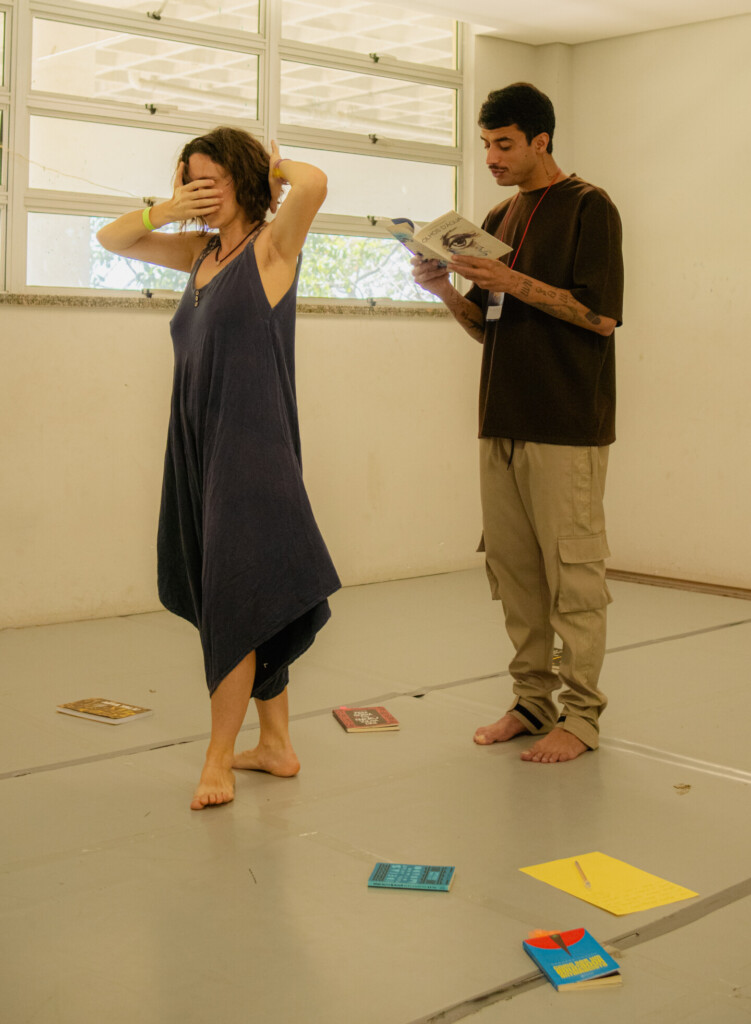
Thiago SKP led the workshop “The Other Side of the Verse”. His class performance used poetic techniques, rhyme and improvisation to connect figures of speech with lived experience and identity formation, using hip-hop as a tool for transformation. The session included a practical creative writing component and an open space for participants to share their own verses and rhymes, celebrating expression and the collective power of the word.
At the end of the conference, we screened the documentary “VALE?”, which portrays the daily lives of five artists from the Iron Quadrangle in Minas Gerais and how environmental crimes committed by the mining industry have affected their artistic practice and their engagement with local communities.
Photos by Brenno Campos
Text contributions by Brenno Erick and Mayra Motta